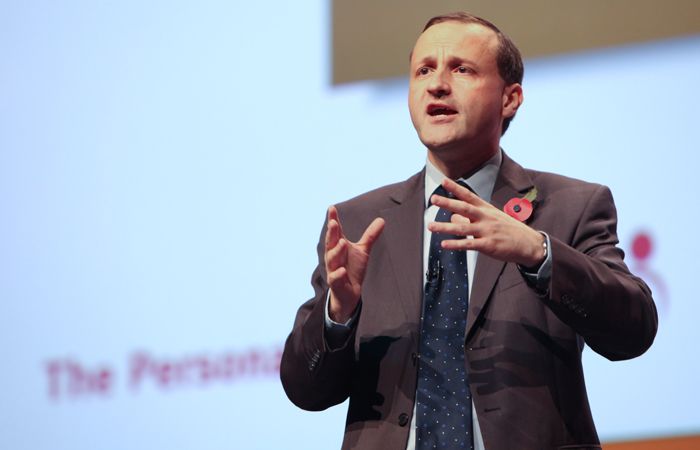
Former pensions minister Steve Webb has predicted that minimum automatic enrolment pension contributions will rise from 8% to 12% by around 2037, with employers and employees each contributing 6%.
Webb, who is now a partner at Lane Clark & Peacock (LCP), believes the Pensions Commission will recommend a gradual increase in contributions during the 2030s, with legislation potentially introduced in 2027–28.
Speaking at the Personal Investment Management & Financial Advice Association (PIMFA) Pensions and Retirement Planning Conference in London yesterday (11 November), Webb suggested ministers were already aware of the likely direction of the commission’s recommendations.
“The government already knows what they’re going to find,” he said.
“They don’t want to wait until they wake up on a Tuesday morning in February to read the report and go, ‘Oh my goodness, is that what they’ve found?’
“The government knows already what the Pensions Commission is going to find, and there is now a debate going on within government as to whether they can accept recommendations and all of that.
“But the lead assumption would be that the big problem of not enough money going into DC pensions will be addressed slowly.
“I would be astonished if the answer isn’t six plus six by 2037 or something.”
‘We need a plan to get people contributing more to their pensions’
Under the current automatic enrolment system, minimum contributions are set at 8% of qualifying earnings, with employers required to contribute at least 3% and employees generally contributing the remaining 5%, including tax relief.
The Pensions Commission is due to publish its final report in early 2027, with Webb predicting legislation could follow soon after.
He suggested contribution increases could begin in 2031 or 2032 and be phased in over approximately five years.
Webb said a gradual approach would reflect lessons from the original rollout of automatic enrolment, when employers and employees were given several years to prepare for higher contributions.
His comments follow a call from Pensions UK last month for minimum contributions to increase to 12% by 2035 at the latest.
The trade body proposed increasing minimum employer contributions from 3% to 5% initially, before moving to an equal 6% split between employers and employees.
Meanwhile, research published by the Institute for Fiscal Studies in July warned that higher minimum contributions would create trade-offs between improved retirement incomes, reduced take-home pay and increased costs for employers.
Webb called for political consensus around any increase, warning against attempts to reverse the changes once they had begun.
“I hope they do. I mean, they need to, for goodness’ sake,” he said.
“And if they do, although there’ll be lots of moaning and complaining, I hope opposition parties won’t try and reverse it.
“It’s kind of difficult to reverse something like that once it’s gone forward and started to happen. So I hope that will attract some consensus.”
Webb also urged the commission to address the low level of pension saving among the self-employed.
He said just 4% of exclusively self-employed workers were actively contributing to a pension, despite years of discussion about how to improve retirement saving among this group.
Webb suggested introducing a form of automatic enrolment through the tax return system, with workers enrolled into pensions designed to accommodate fluctuating incomes.
“One of the things I hear from self-employed people is they perceive that taking out a pension is like entering into a contract and with binding regular payments, and that doesn’t fit because my income goes up and down,” he said.
He argued that a pension specifically designed and marketed for self-employed workers could help overcome these concerns.
“There’s four million odd self-employed people. You’ve got to do something,” he said.
“You can’t really have a commission set the verdict for the next 15, 20 years and not do anything about the self-employed.”
There is one comment at the moment, we would love to hear your opinion too.
Then let’s hope that salaries will significantly improve and that the cost of living will significantly reduce. Otherwise I would guss that the opt-out rates will go sky high. In any case I would imagine that most would regard this as just another tax.
You must be logged in to post a comment.