When hundreds of thousands of Poles gather in Warsaw on Wednesday to commemorate the restoration of their country’s independence in 1918, they will be marking considerably more than a historical anniversary.
The annual Independence March has become a political arena in which competing visions of the Polish state are expressed. This year, however, the confrontation has acquired a particular urgency.
President Karol Nawrocki has confirmed that he will participate alongside nationalist and conservative movements, while his political confrontation with Prime Minister Donald Tusk has brought Poland’s Constitutional Tribunal into an extraordinary struggle over its own leadership.
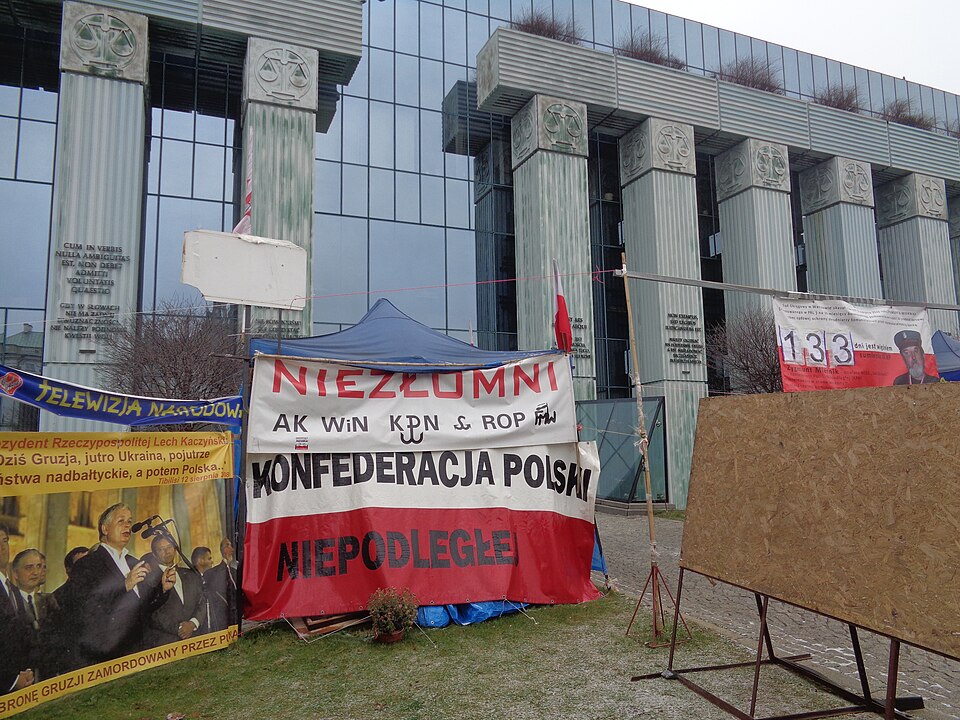
The symbolism is difficult to overlook. A demonstration organised around national sovereignty is taking place precisely when Poland’s political institutions cannot agree on who is constitutionally entitled to exercise authority.
The immediate confrontation began on 30 October, when Constitutional Tribunal judge Anna Korwin-Piotrowska announced the temporary suspension of the institution’s president, Bogdan Święczkowski, and his deputy, Bartłomiej Sochański.
The decision followed months of obstruction surrounding judges elected by the parliamentary majority but whose appointments President Nawrocki refused to recognise.
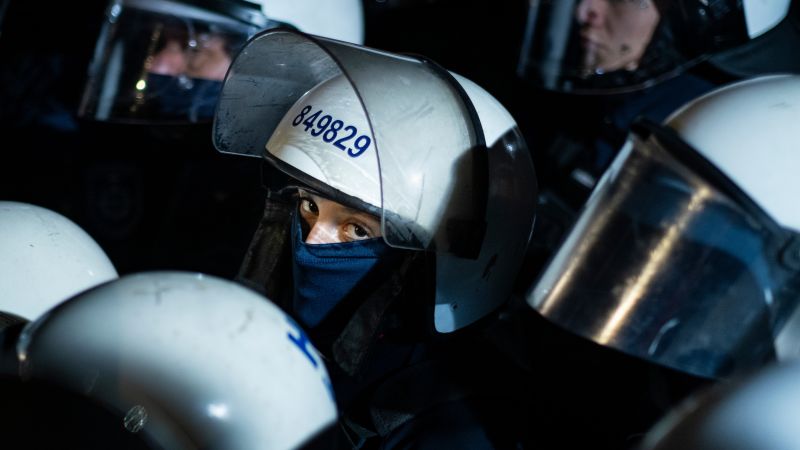
Święczkowski rejected the suspension, while Nawrocki abandoned an official journey to Senegal and returned to Warsaw. Police were deployed around the Tribunal as opposing political groups accused one another of unconstitutional behaviour.
Yet the underlying dispute is more complicated than a struggle between a government seeking judicial independence and an opposition defending its political appointments.
Poland’s institutional crisis dates to 2015, when the Law and Justice party (PiS) began reshaping the judiciary. Subsequent judicial appointments and rulings attracted repeated challenges from European legal institutions.
In December 2025, the Court of Justice of the European Union concluded that Poland’s Constitutional Tribunal failed to satisfy European requirements of judicial independence.
For Tusk, restoring the court’s legitimacy is therefore central to fulfilling commitments undertaken by Poland as an EU member state.
But the government’s methods raise a difficult constitutional question of their own.
The International Commission of Jurists warned on 3 November that although Nawrocki’s obstruction of parliamentary judicial appointments violated international standards, suspending the Tribunal’s leadership through disputed procedures involving the police was also unacceptable.
This is the central paradox: restoring the rule of law through legally contested measures risks perpetuating the institutional uncertainty that reform is intended to resolve.
The dispute reflects a deeper disagreement about Poland’s relationship with European institutions.
For Tusk’s coalition, membership of the European Union provides a legal framework within which Polish sovereignty can be exercised, alongside economic integration and collective security.
For Nawrocki and much of the nationalist opposition, sovereignty increasingly means limiting the ability of supranational institutions to influence domestic political decisions.
Neither position necessarily entails leaving the EU. Nevertheless, the distinction becomes increasingly consequential when national political institutions reject judicial decisions issued at European level.
The slogan chosen…