Who doesn’t dream of owning her own home? Most of us take it for granted that if we work hard enough, save enough money and keep a good credit score, a mortgage is going to put us on our way to realizing the American dream. But attaining that dream wasn’t even possible for our mothers or grandmothers. That’s because until 52 years ago, it was against the law for women to obtain a mortgage.
Even when women began entering the work force en masse in the 1960s, that didn’t mean they would be paid the same wage as men for doing the same job. John F. Kennedy’s Equal Pay Act of 1963 required equal pay for equal work, although in practice that continues to still be a challenge for women in many occupations.
But there is even more to the story of women’s struggle on the road to home ownership than lack of income.
Lyndon B. Johnson’s Fair Housing Act of 1968 addressed discrimination against certain segments of society, primarily Blacks, when it came to lending practices. In theory, it should have also benefited women, but believe it or not, women who applied for a mortgage back then had to have a male cosigner – her husband, brother or father, even if that man had poor credit or no income at all.
And banks could outright refuse to lend to unmarried women.
It wasn’t until the women’s liberation movement that started in the late 1960s that women would finally achieve the right to borrow money on their own to purchase a home.
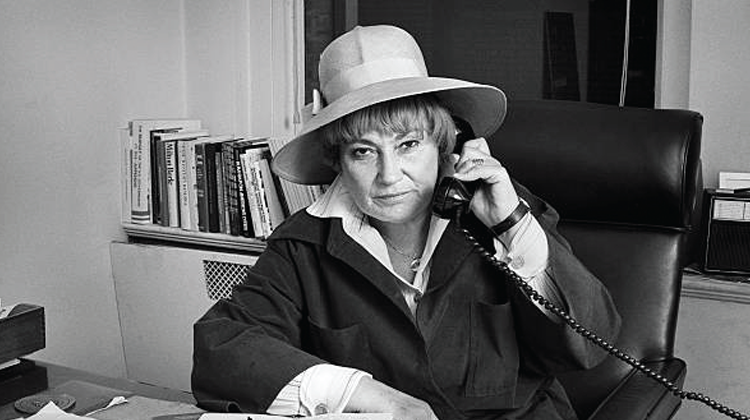
In 1974, the Equal Credit Opportunity Act, initially spearheaded by the outspoken Democratic congresswoman and prominent women’s movement leader from New York, Bella Abzug, made it illegal to discriminate in lending based on sex and marital status, as well as on race, religion and national status.
It also allowed women to open a bank account and apply for a credit card in her own name, a practice that at the time was not accepted. Another achievement of that legislation was that a lending institution could no longer require a female applicant to provide a “baby letter” from a doctor indicating she was not pregnant and was either on birth control or not able to conceive.
That bizarre stipulation had been used by lenders in their belief that that women borrowers who subsequently gave birth would quit their jobs and thereby default on their loan.
Such archaic practices seem hard to fathom these days but were issues that were fully entrenched in mainstream America during most of the 20th century.
Today, single women make up 20% of homebuyers. That’s double the rate for single men. Women are also less likely than men to default on their mortgage, even though women as a group borrow at a higher interest rate due to their lower income and larger debt.
Women also dominate in the business of buying and selling real estate and make up 65% of the country’s realtors. Additionally, 62% of property managers are women and a third of all mortgage brokers are women. The first female secretary of the U.S. Department of Housing and Urban Development (HUD) was appointed in 1975 by President Gerald Ford and was succeeded by another woman appointed by President Jimmy Carter.
President Joe Biden also appointed a woman to that position during his term.
Today, it’s hard for us to imagine the many injustices faced by women who tried to obtain the gender autonomy that we now enjoy. Thankfully, we no longer must endure it.