Samsung Display has won international recognition for the cybersecurity capabilities of its automotive organic light-emitting diode (OLED) products. As the shift toward software-defined vehicles (SDVs) accelerates and in-vehicle displays increasingly become subject to security verification, the component supplier is seen as having preemptively met automakers' supply chain standards.
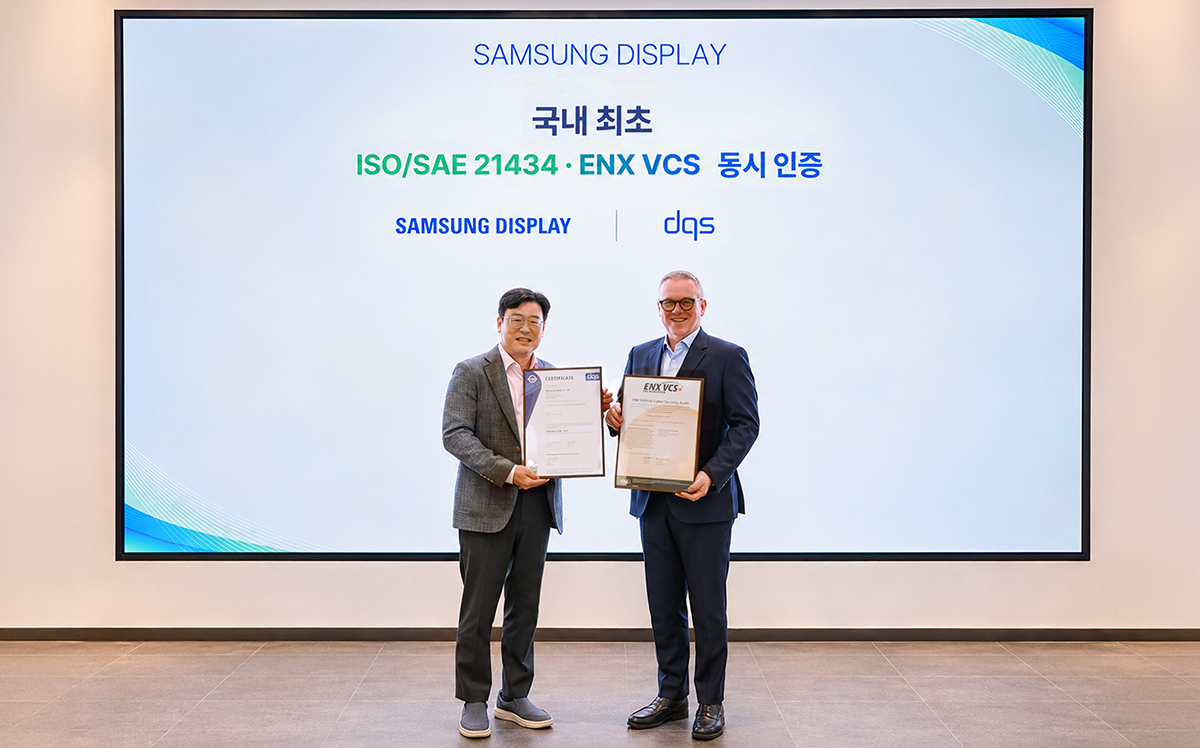
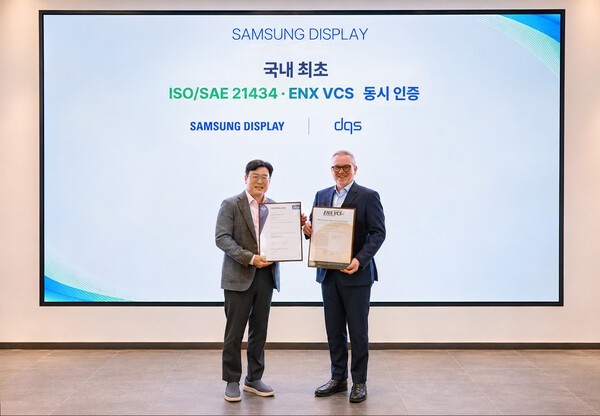
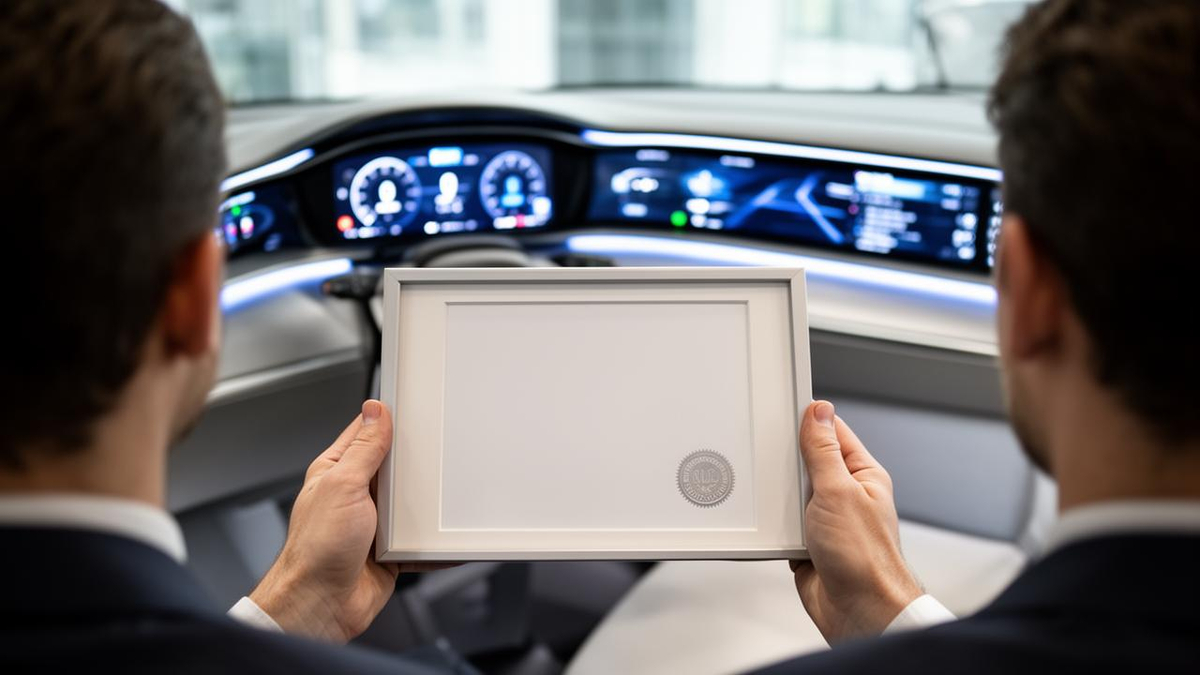
Samsung Display said on the 10th that it held a certificate award ceremony at its headquarters (SDR) in Yongin, Gyeonggi Province, and simultaneously obtained the "ISO/SAE 21434" international standard for automotive cybersecurity engineering and the "ENX VCS" automotive cybersecurity management system assessment. It is the first time a display industry player has received both certifications together.
The event was attended by Yoo Kyung-jin, vice president and head of Samsung Display's small and mid-sized product development team, and Ingo M. Rübenach, CEO of the global certification body DQS, which conducted the audit.
ISO/SAE 21434 is an international standard requiring cybersecurity risk management across the entire vehicle lifecycle, from design and development through production, operation and disposal.
ENX VCS is a system under which the European Network Exchange (ENX Association) of automotive manufacturers and suppliers independently audits whether the security management systems of automakers and parts suppliers are actually established and operated based on this standard.
As automotive cybersecurity regulations become mandatory, centered on Europe, automakers are increasingly requiring security certifications throughout their parts supply chains.
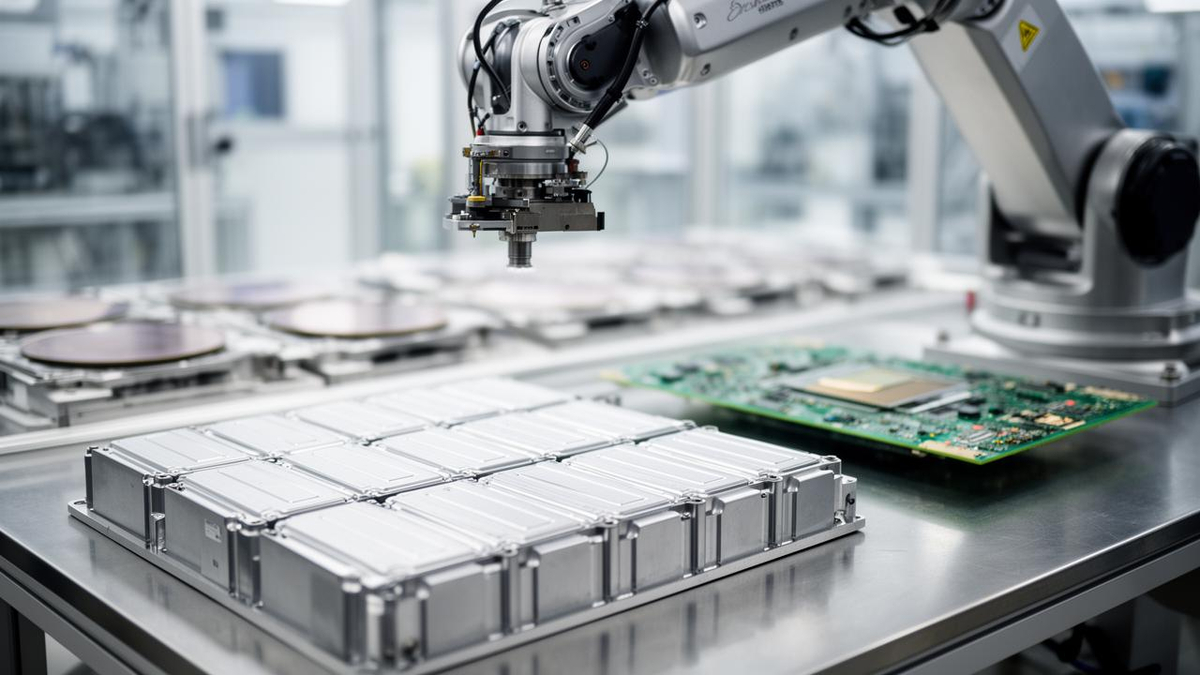
In line with the expansion of its automotive OLED business, Samsung Display has assigned dedicated cybersecurity personnel and built management processes to analyze potential risks and prepare countermeasures. In particular, it responded to the audit by directly disassembling automotive OLED modules to check for hacking vulnerabilities and applying security designs to its products to reduce the identified risks.
Note: The ENX VCS audit was conducted by the global certification body DQS.
Rübenach said it was meaningful that Samsung Display demonstrated systematic security management capabilities at a time when cybersecurity is growing in importance in the automotive industry. He predicted the certifications would help the company meet the demands of global automakers and enhance its market competitiveness.
Vice President Yoo said, "In the SDV era, cybersecurity is a key element underpinning product competitiveness," adding, "We will solidify our display leadership in the mobility market with OLED products that meet the security standards demanded by automakers and consumers." The company's position is that it has proven its product competitiveness by passing automakers' standards amid expanding security regulations.
Automotive displays are being used ever more widely, in instrument clusters, center information displays, and front-passenger and rear-seat entertainment screens. As vehicles increasingly connect to external networks, display modules can also be identified as hacking routes, prompting automakers to require security verification from the component stage.
As European regulators' requirements tighten, whether a supplier holds certifications is expected to become a factor in order competition among parts makers.
Samsung Display is expected to accelerate the expansion of automotive OLED…