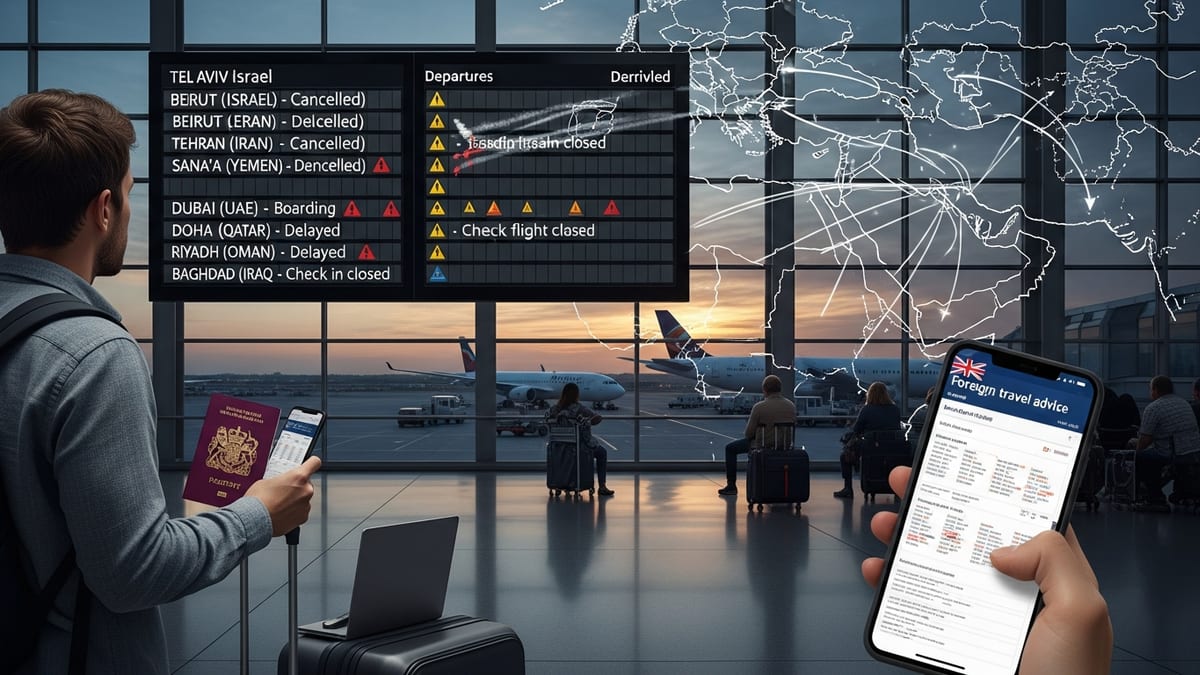
Americans planning international trips for the 2026 holiday season are being urged to tighten their preparations, as updated U.S. State Department guidance links passport and paperwork checks with a global security environment that officials describe as requiring “increased caution” for travelers abroad.
Get the latest news straight to your inbox!
Holiday travel planning for U.S. citizens is unfolding against a backdrop of broad security warnings. The State Department’s Worldwide Caution, updated in 2026, advises Americans everywhere to exercise increased vigilance because of heightened tensions, particularly connected to instability in parts of the Middle East.
Publicly available information on the advisory highlights the potential for sudden disruptions to flights, periodic airspace closures and targeted attacks on U.S. interests overseas.
The department’s Worldwide Caution page and related consular guidance emphasize that risks are not confined to one country. Coverage of recent embassy alerts in the region notes that Iran and groups aligned with it have been linked to threats against U.S. interests and locations associated with Americans in multiple countries, while separate advisories cite ongoing concerns about terrorism, unrest and armed conflict.
For travelers, this means holiday itineraries that transit the Middle East or nearby hubs can be vulnerable to last-minute cancellations and route changes.
In practical terms, the State Department directs travelers to read the detailed Travel Advisory for each destination before booking and again just before departure, since threat assessments and risk indicators can change with little notice.
An internal description of the advisory system in the department’s Foreign Affairs Manual makes clear that travel levels and worldwide cautions are based on threat data drawn from embassies, other U.S. agencies, partner governments and open sources, underscoring that this is an integrated global risk picture rather than a seasonal reminder.
Travel industry trackers have also highlighted a flurry of changes to individual country advisories in recent months, from Level 2 notices urging increased caution to Level 3 advisories asking travelers to reconsider trips.
For holidaymakers stitching together multi-country itineraries, these updates can affect both routing and insurance coverage, especially where terrorism, civil unrest or wrongful detention indicators are present.
Alongside security warnings, 2026 holiday guidance has a renewed focus on documentation. Recent regional television coverage citing State Department spokespeople stresses that one of the most common mistakes American travelers make is assuming that a passport is “good to go” simply because it has not yet expired.
Many popular holiday destinations require that a passport remain valid for at least six months beyond the intended date of departure from the country, and airlines may deny boarding if that requirement is not met.
In interviews summarized by local outlets in November 2026, State Department representatives encouraged travelers to check their passport expiration date now and count forward six months from the date they expect to fly home. If the remaining validity falls short, travelers are urged to renew before making nonrefundable bookings.
Although processing times fluctuate, the department’s own materials continue to recommend allowing several weeks for routine service during busy periods, with additional time if mailing is involved.
Visa rules are another pressure point. The State Department and destination embassies advise that Americans confirm whether they need a visa or electronic travel authorization before departure, and whether any new health or security screening is in effect.
Separate federal notices this autumn show how fast such requirements can appear, including an order tailored to passengers who have recently been in specific countries linked to disease outbreaks. While that order concerns inbound travel to the United States, it illustrates the kind of targeted restrictions that can emerge with little lead time in either direction, potentially complicating holiday plans.
Travelers are also being steered toward the department’s country-specific information pages, which consolidate entry rules, local laws and documentation tips. Public guidance explains that these pages sit alongside the numeric advisory level for each destination and may contain details such as minimum passport validity, blank page requirements and any special rules for travelers with dual nationality or children.
The Travel Advisory system itself is central to this year’s messaging.
According to official descriptions and congressional testimony on consular services, every country receives an overall rating from Level 1, where travelers are advised to exercise normal precautions, to Level 4, which advises “do not travel.” Level 2 notices urge increased caution, while Level 3 advisories recommend that Americans reconsider travel to the country in question.
Each advisory is tagged with risk indicators. In 2026, these include terrorism, civil unrest, crime and wrongful detention among others, helping travelers understand why a country has a particular level.
For example, publicly available advisory summaries this fall show Level 3 ratings for several Middle Eastern countries where terrorism and unrest indicators are prominent, while a number of European destinations carry Level 2 notices that…