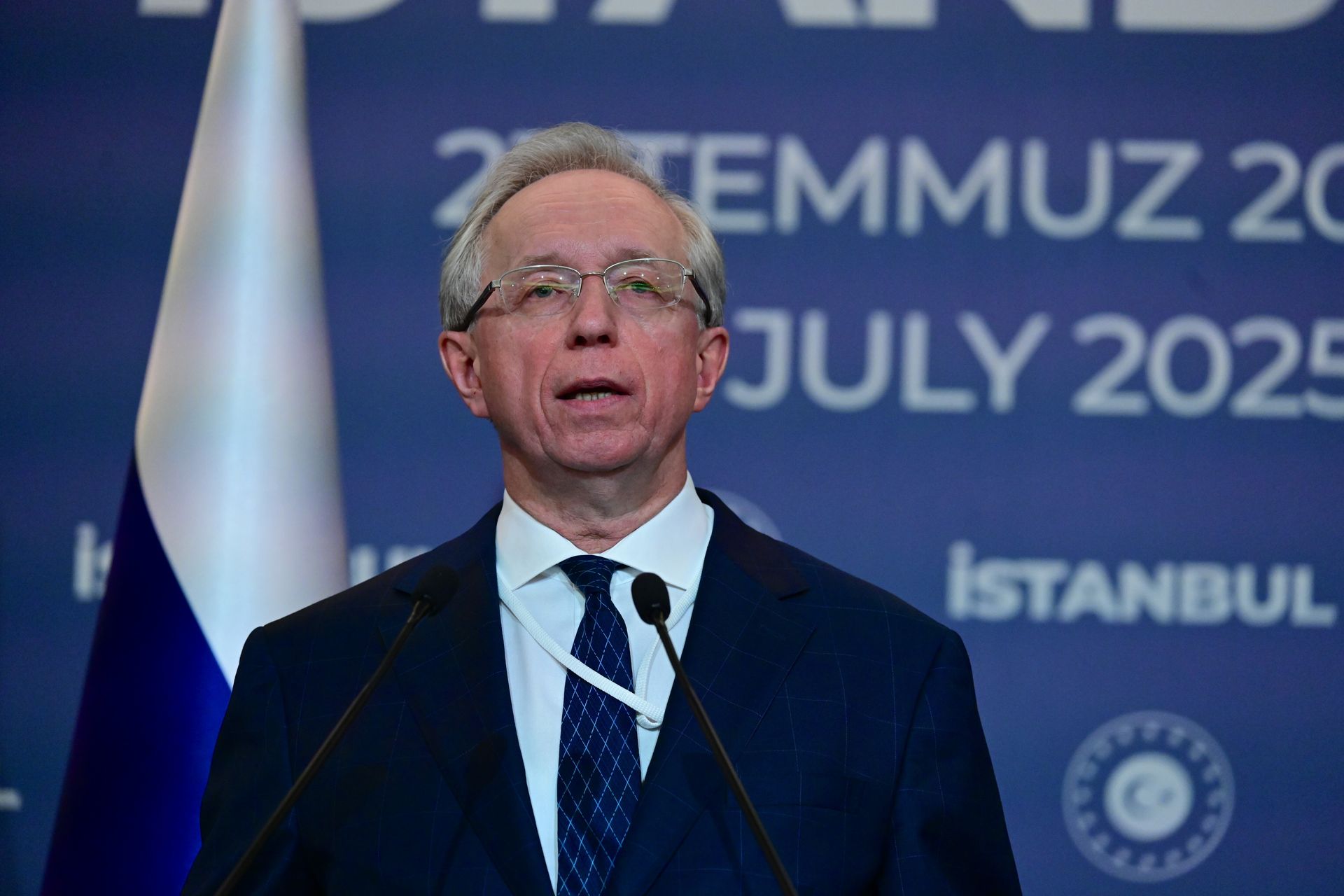
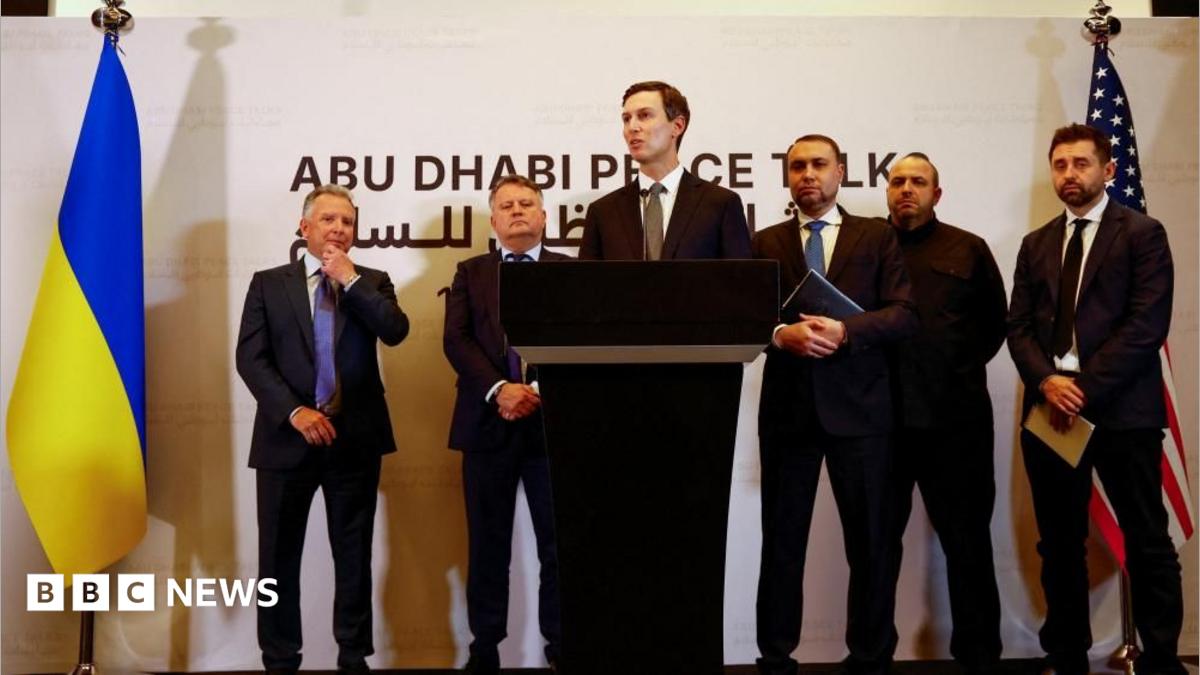
Russia’s negotiating group at the talks with the US and Ukraine, held in Abu Dhabi on November 10–11, included five members of the main delegation and six experts. The composition of the delegation and each participant’s role were never officially announced — on the eve of the talks, state and pro-Kremlin media outlets, citing sources, published a list of Russia’s representatives.
Several members of the delegation, including its head, presidential aide Vladimir Medinsky, had already taken part in previous rounds of talks. Four of Russia’s representatives went to discuss the terms of a peace settlement for the first time. Here’s who represented Russia at the talks and what they’re known for.
head of the delegation, presidential aide, and head of the Russian Military Historical Society for the past 13 years
Medinsky is a graduate of MGIMO, a former lawmaker in the State Duma, the lower house of Russia’s parliament (2003–2011), and a former culture minister (2012–2020). As head of the Culture Ministry, he became known for aggressively protecting Russian cinema, a scandal over his dissertation, and crude remarks.
His reputation as an amateur historian and propagandist later did not stop him from rewriting Russian textbooks, including history textbooks. Medinsky has led the group of Russian negotiators since 2022. His role in the talks has been linked to the fact that Russia had not changed its conditions for ending the war in recent years.
Back in Istanbul, Moscow demanded Kyiv’s effective capitulation: radically reducing its armed forces, abandoning its bid to join NATO, and giving up attempts to retake Crimea by force.
He has taken part in the talks since 2025. Galuzin has worked at the Foreign Ministry since 1983, holding posts both at its central office and abroad. He has worked extensively in Asian countries, including Japan, where he addressed the question of peace treaty negotiations. A dispute over the Kuril Islands has kept Moscow and Tokyo from signing a peace treaty formally ending World War II.
The talks stopped after Japan imposed sanctions on Russia over its invasion of Ukraine. Galuzin now oversees relations with CIS countries.
This is his first time taking part in the talks. At the Foreign Ministry, Ryabkov oversees relations with the U.S., Canada, Latin America, BRICS, and arms control. Notably, it was Ryabkov who, on the eve of the full-scale war, explained Moscow’s demands regarding the future architecture of European security and took part in talks with the U.S. on security guarantees.
Agentstvo, an independent Russian investigative outlet, suggests that Ryabkov’s inclusion in the current delegation is further evidence that Russia wanted to discuss the future of the entire European security system at the talks in Abu Dhabi.
head of the FSB’s operational information and international relations department
He is taking part in the talks for the first time. Until 2016, he headed the FSB’s department for the protection of the constitutional order and the fight against terrorism, which is responsible for prosecuting dissidents. He then spent three years heading the agency’s internal security department.
In 2019, he was appointed deputy head of the military counterintelligence department, and in 2024 Komkov became head of the FSB’s operational information and international relations department.
head of the Main Directorate of the General Staff of the Russian Armed Forces
He is under U.S. sanctions over the interference…